
Vulnerability of buildings
Differentiation of structures (buildings) into vulnerability classes
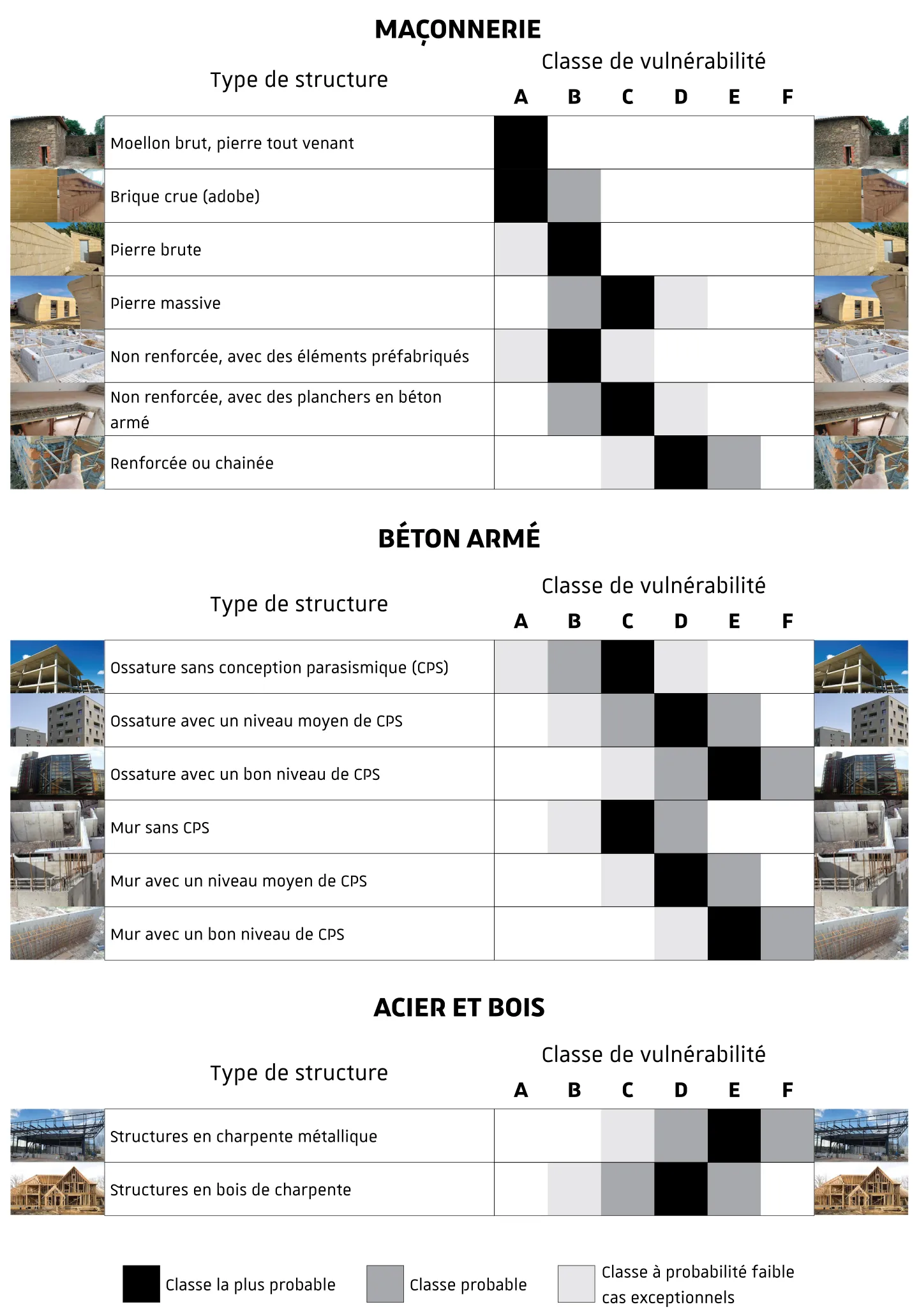
Section titled “Differentiation of structures (buildings) into vulnerability classes”The European Macroseismic Scale (EMS-98) uses a simple differentiation of the resistance of buildings to mechanical stresses caused by seismic shocks. This differentiation, summarized in the EMS-98 vulnerability class table below, allows for quick and practical classification of buildings according to the type of construction and materials used, into six vulnerability classes, from A for the most vulnerable to F for the most resistant. For example, a major tremor, such as a macroseismic intensity of VIII or IX, is likely to cause significant damage or even collapse to many stone masonry buildings (vulnerability class A or B), but will cause only minor damage to a few recent reinforced concrete buildings that meet high earthquake-resistant construction standards (vulnerability class E or F).
To assign an EMS-98 vulnerability class to a building (see table below), you must first determine the overall structure type of the building (among the main European types: masonry, reinforced concrete, steel, or wood), then refine this type by choosing from the different models offered. For example, after choosing the “masonry” type, you can determine whether this masonry is made of rubble stones, earth bricks, simple stones, or prefabricated elements (concrete blocks, bricks) with or without seismic reinforcement levels. This results in a most likely vulnerability class associated with this construction (black square, see table below), probable classes (dark gray square), and less propable but rather exceptional classes (light gray square). This variability in vulnerability class for the same type of structure is linked to other factors that aggravate or improve vulnerability, such as the irregularity of the building’s shape (in plan and elevation), the type of floors, the quality of construction, the state of maintenance or dilapidation of the building, the position of the building in relation to neighboring buildings (end of a row of buildings, or at the corner of two rows), any renovations, etc. This assessment is therefore a matter for expert judgment, based on specific criteria, for which specific training is required.
Reference
Section titled “Reference”Grüntal, G. (Ed.) (1998). European Macroseismic Scale 1998 (EMS-98), (Cahiers du Centre Européen de Géodynamique et de Séismologie ; 15), Luxembourg : Centre Européen de Géodynamique et de Séismologie, 99 p. doi:10.2312/EMS-98.full.en